Documents shared by Anónimo
Eawrger
9. A researcher wants to know the intelligence of students in a school. He selected two groups of students. In the first group there 150 students having mean IQ of 75 with a S.D. of 15 in the second group there are 250 students having mean IQ of 70 with S.D. of 20. Is there a significant difference between the means of two groups ?
Solution
Given
For Group I:
-
Sample size,
n1=150n1=150
-
Sample mean,
xˉ1=75xˉ1=75
-
Standard deviation,
s1=15s1=15
For Group II:
-
Sample size,
GFNBFGN
The marks obtained in Statistics in a certain examination found to be normally distributed. If 15% of the students ≥ 60 marks, 40% < 30 marks, find the mean and standard deviation?
where μμ is the mean and σσ is the standard deviation.
Given
-
P(X≥60)=0.15P(X≥60)=0.15
-
P(X<30)=0.40P(X<30)=0.40
We need to find μμ and σσ.
Step 1: Convert to Z-values
(i) P(X≥60)=0.15P(X≥60)=0.15
Hence,
P(X<60)=0.85P(X<60)=0.85
From the standard normal table,
P(Z<1.04)
FBGFSHNSFG
11. Calculate the coefficient of correlation from the following data
|
X |
12 |
9 |
8 |
10 |
11 |
13 |
7 |
|
Y |
14 |
8 |
6 |
9 |
11 |
12 |
3 |
Step 3: Substitute into the for
To calculate the Karl Pearson's coefficient of correlation (r):
The formula is:
r=∑dx dy∑dx2×∑dy2r=∑dx2×∑dy2∑dxdy
where:
-
dx=X−Xˉdx=X−Xˉ
-
dy=Y−Yˉdy=Y−Yˉ
Step 1: Find the means
Xˉ=12+9+8+10+11+13+77=707=10Xˉ=712+9+8+10+11+13+7=770=10Yˉ=14+8+6+9+11+12+37=637=9Yˉ=714+8+6+
Respiratory chest X-rays interpretation
1. Pleural effusion -
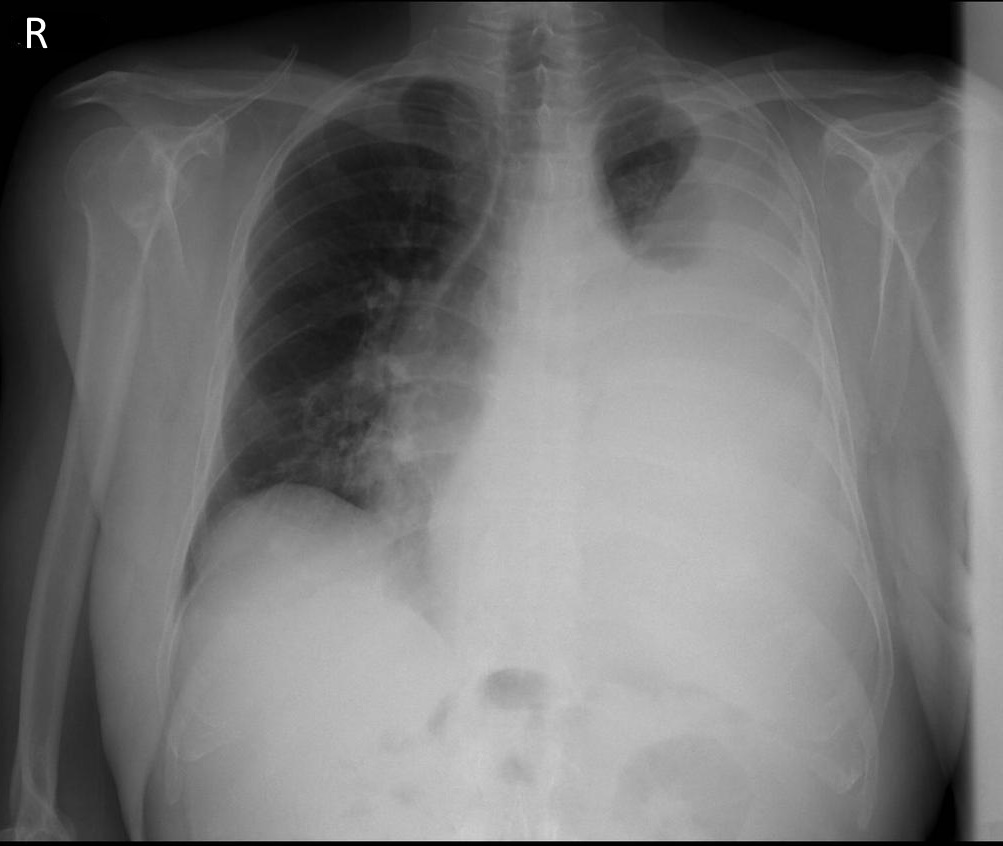
Interpretation-
Quality- RIPE- good
1. Airways- trachea deviated to the right (pushing effect- because of effusion); cannot visualise the carina or bronchus
2. Breathing- effusion in the left lower and middle zones which end in the upper zone with a meniscus sign; lung markings present throughout the right lung
3. Cardiac- cannot assess the size, difficult to visualise left heart borders
4. Diaphragm- right hemidiaphragm can be seen; left - cannot be seen, blunting of
sdfzzdsg
Find the GCD OF (143,227)?
The Euclidean Algorithm is used to find the Greatest Common Divisor (GCD) of two integers by repeatedly dividing the larger number by the smaller number until the remainder becomes 0.
Step 1:
227=143×1+84227 = 143 \times 1 + 84227=143×1+84
Step 2:
143=84×1+59143 = 84 \times 1 + 59143=84×1+59
Step 3:
84=59×1+2584 = 59 \times 1 + 2584=59×1+25
Step 4:
59=25×2+959 = 25 \times 2 + 959=25×2+9
Step 5:
25=9×2+725 = 9 \times 2 + 725=9×2+7
Step 6:
9=7×1+29 = 7 \times
ывфвы
0
1. Общие сведения об электроснабжении объектов. Основные элементы системы электроснабжения объектов.
2. Категории надежности электроснабжения электроприемников. Понятие независимого источника питания.
3. Сущность пожарной опасности электроустановок. Преобразование электрической
...dasda
2. Technical Feasibility Checks: ◉Machinery ◉Technology ◉Skilled workers ◉Raw materials
3. Financial Feasibility Checks: ◉Investment ◉Profit ◉Cash flow ◉ROI
4. Social Feasibility Checks whether project benefits society. Examples: ◉Employment ◉Environment ◉Community welfare
Project Implementation Stages ◉Idea generation ◉Feasibility study ◉Project report ◉Finance arrangement ◉Registration ◉Purchase machinery ◉Production ◉Marketing
MODULE 3: Financial Analysis
3123123
1. Entrepreneur An entrepreneur is a person who starts, organizes and manages a business by taking risks to earn profit. Example: Ratan Tata, Narayana Murthy, Kiran Mazumdar-Shaw.
2. Qualities/Characteristics of an Entrepreneur ◉Risk-taking ability ◉Leadership ◉Creativity and innovation ◉Self-confidence ◉Decision-making ability ◉Hard-working ◉Problem-solving ability ◉Vision and planning Example: Elon Musk invested in electric cars when many believed they wouldn't succeed.
3. Venture
Farhan tt
Ecosystem
Definition:
An ecosystem is a community of living organisms (plants, animals, and microorganisms) that interact with each other and with non-living components (air, water, soil, sunlight, and minerals) in a particular area. It is a basic functional unit of nature where energy flows and nutrients are recycled.
Components of Ecosystem:
1. Biotic Components (Living Components):
These are the living parts of an ecosystem.
• Producers: Green plants that make their own food through photosynthesis.